


Connect an existing machine without replacing it
"My equipment has no interface." It is the first sentence we hear, and it is rarely an obstacle. A copier, a sports machine, a press, a compressor, a gate: almost everything exposes something. When it does not, we add a sensor. KERN-IT ties the machine to a unit, the unit to a platform, and the platform to what you care about: counting, invoicing, alerting, planning.
We did it for copy service copiers, for a sports machine whose electronics and software we rebuilt, and for urban furniture. Each time without replacing the equipment, and without stopping operations.
Three ways to connect a machine
What it already exposes
Manufacturer interface, standard protocol, internal log: many professional machines know how to talk, nobody ever listened to them. We plug in, read and keep the history.
What we can read
Counters, serial port, contacts, indicator lights: simple signals our unit picks up directly on the machine, without changing how it works.
What we add
Cycle, current, vibration, temperature or presence sensor: a few components fixed on the equipment are enough to measure its real use.
What you get out of it
Counting and invoicing
Pages, cycles, hours, kilometres: the measurement taken on the machine becomes the basis of the invoice, with no manual reading.
Planned maintenance
Counters and trends say when to intervene, instead of waiting for the failure or visiting every site on a fixed date.
Alerts
Machine stopped, empty tray, drift, silence: the right person is warned by email, SMS or ticket.
Real use
Which machines run, at what hours, for whom: the figures that let you invest or remove a useless piece of equipment.
Three examples
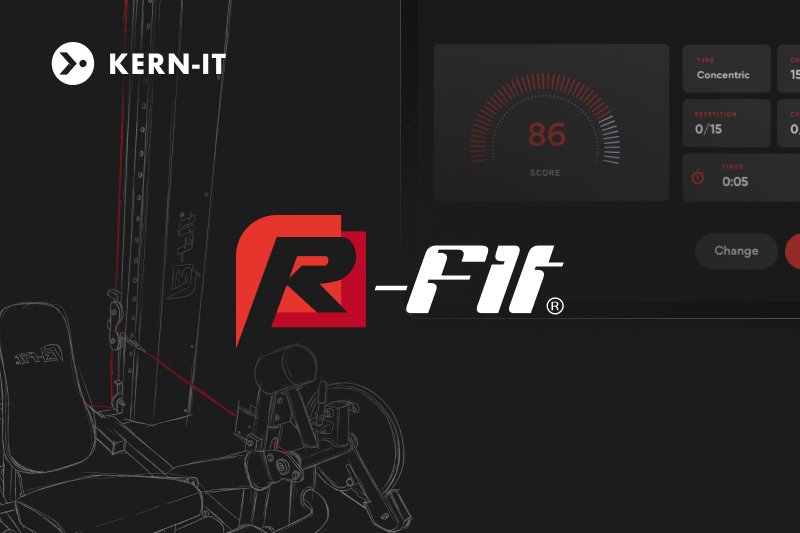
A sports machine. For R-fit, we rebuilt the embedded electronics and the software of an existing machine: new board, new software, platform and application. The machine measures its sessions and sends them; the fleet is followed from a dashboard.
Copiers. For a university copy service, a unit connected to each copier reads the pages produced and passes the amount to the till. The controller is in its third generation: the hardware has changed, the counting chain has stayed the same.
Urban furniture. For Inseetu, environmental sensors and interactive interfaces built into designer furniture, with the constraint of a public space exposed to everything.
Related articles

Frequently asked questions
Rarely. Reading existing signals does not change how the machine works, and fitting a sensor is usually done during a planned stop of a few hours. We connect a first piece of equipment, we check, then we extend machine by machine.
Not if it is done properly: reading counters or fitting an external sensor does not touch the machine's internals. When a deeper intervention is needed, we say so beforehand, and we design it with the manufacturer or the maintainer.
Whatever answers a decision: how much to invoice, when to intervene, what to replace. A cycle counter and an on/off state are often enough to answer the first two. Extra sensors come later, once the first figures have shown what is missing.
A feasibility study and a pilot kit on one machine start at €10,000. A connected fleet with its platform (units, supervision, alerts, exports) ranges between €25,000 and €70,000 depending on the number of machines and their diversity. See our price ranges.
A machine to connect?
Tell us what it is, what it exposes and what you want to know about it. We answer with a route and a budget.