Spentys
Getting a 3D custom orthosis platform back on track
Client
- Spentys
- Medical
- 2020 -2021
Services
- BackEnd Development
- Creation of an interactive prototype
- Customer management
- FrontEnd Development
- Mobile API
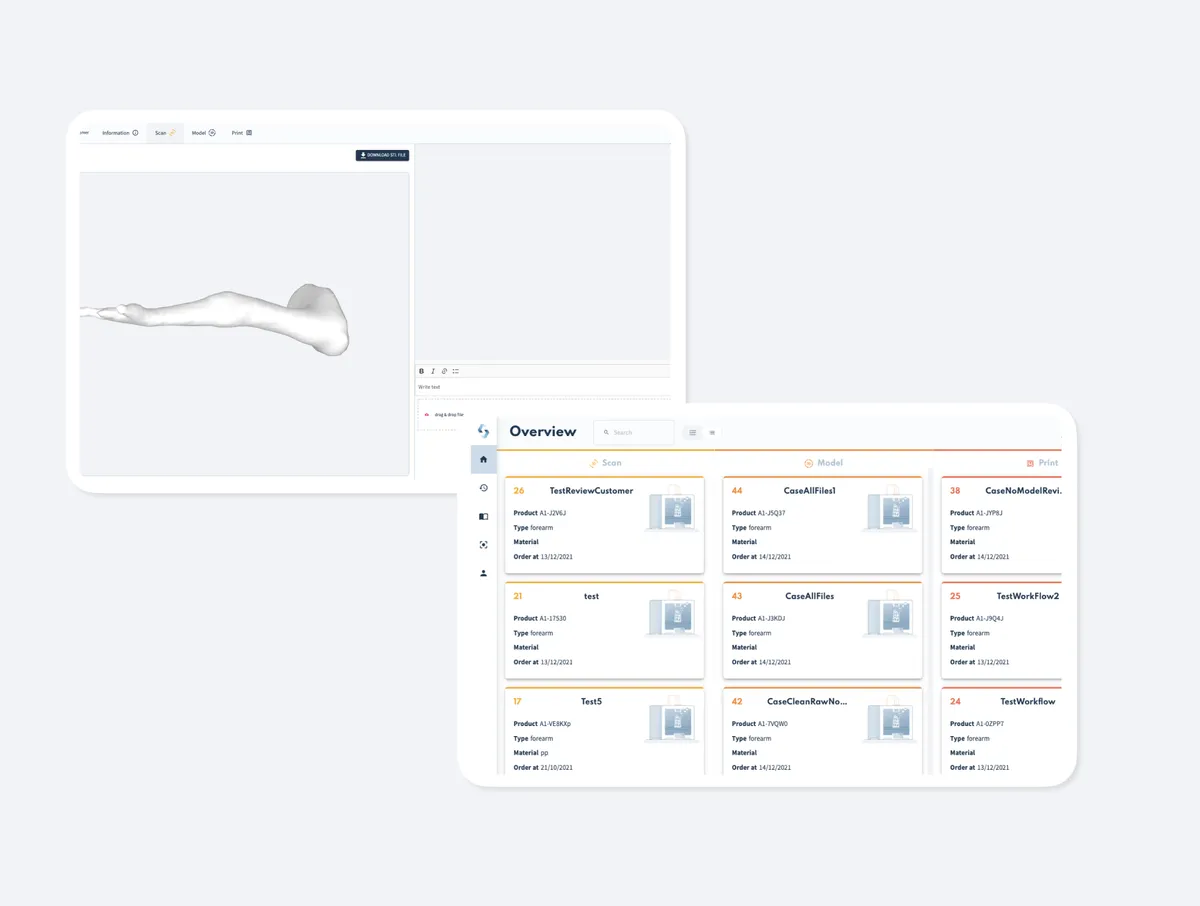
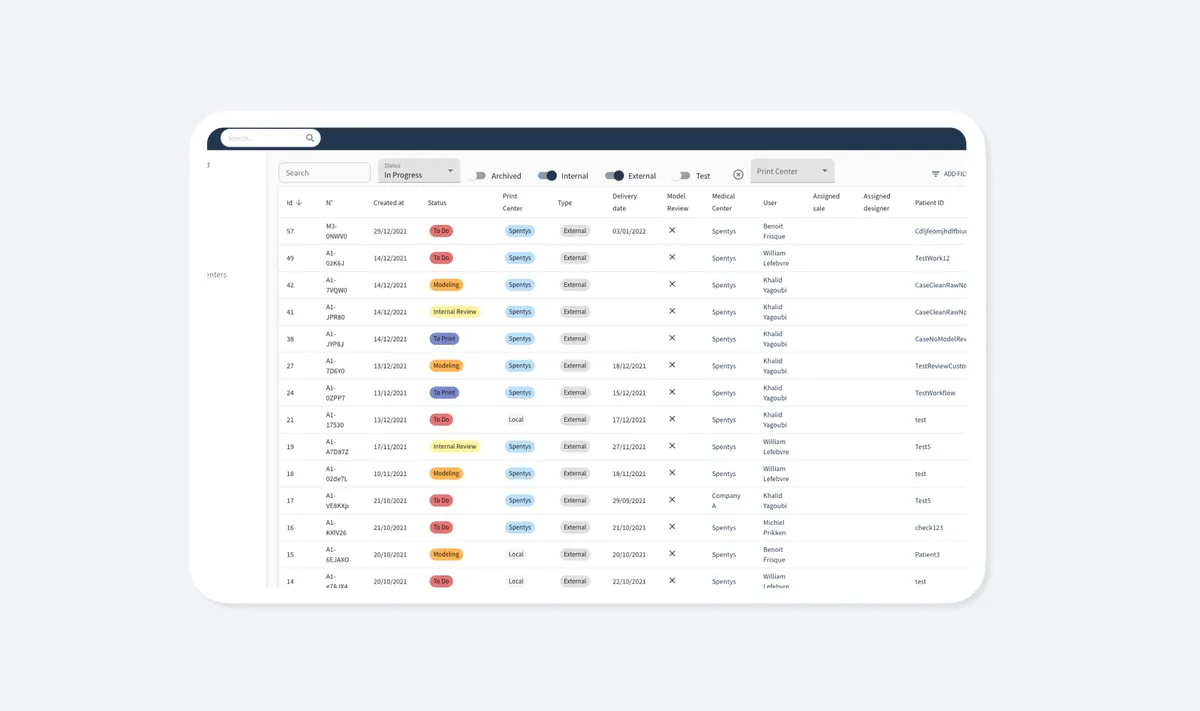
- Order management and tracking
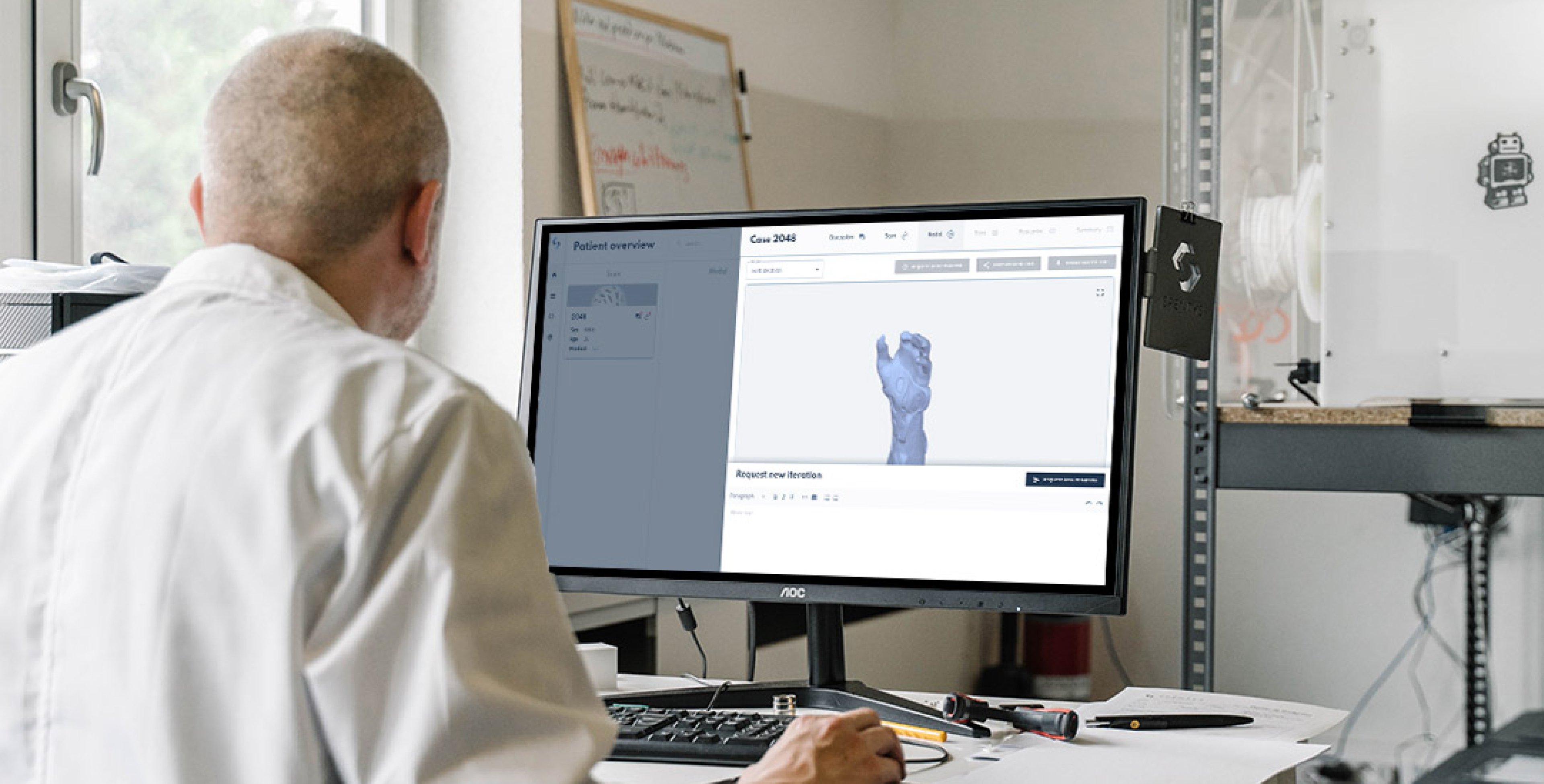
- Viewer integration
Spentys is a Belgian startup digitalising custom orthotics: practitioners scan the patient's limb, the platform generates the 3D model and orchestrates the fabrication and delivery of the orthosis. In 2020, the company had just raised €1.7M and operated in 3 countries.
Their PHP platform and iOS app had been built by a single freelancer who was leaving the team. Nothing was moving forward. The startup was stuck exactly when it needed to accelerate its expansion.
KERN-IT took on a rescue mission in three phases: secure the existing PHP application without interrupting service, build a frontend prototype based on the existing design, then rebuild the backend in Python/Flask with the 3D printing workflows. Unlike a from-scratch rebuild, this approach guaranteed continuity of service throughout the transition.
Nine months later, Spentys took development back in-house with a dedicated team and a solid foundation. MRR doubled in H1 2021. By 2023, Spentys operates in 18+ countries and has helped more than 20,000 patients.
The situation in 2020
Spentys had just raised €1.7M and operated in 3 countries. Their PHP platform and iOS app had been built by a single freelance developer who was leaving the team. Nothing was moving forward: every new feature was a major undertaking. The startup was stuck exactly when it needed to accelerate.
The founders came to KERN-IT with a clear objective: get the platform back on track without interrupting service to the practitioners and patients already in treatment.
Secure before rebuilding
Rather than a full rebuild from scratch, KERN-IT started by securing the existing PHP application. Throwing everything away was not an option with live patients and practitioners in production. Stabilising the existing system was the prerequisite for building what came next.
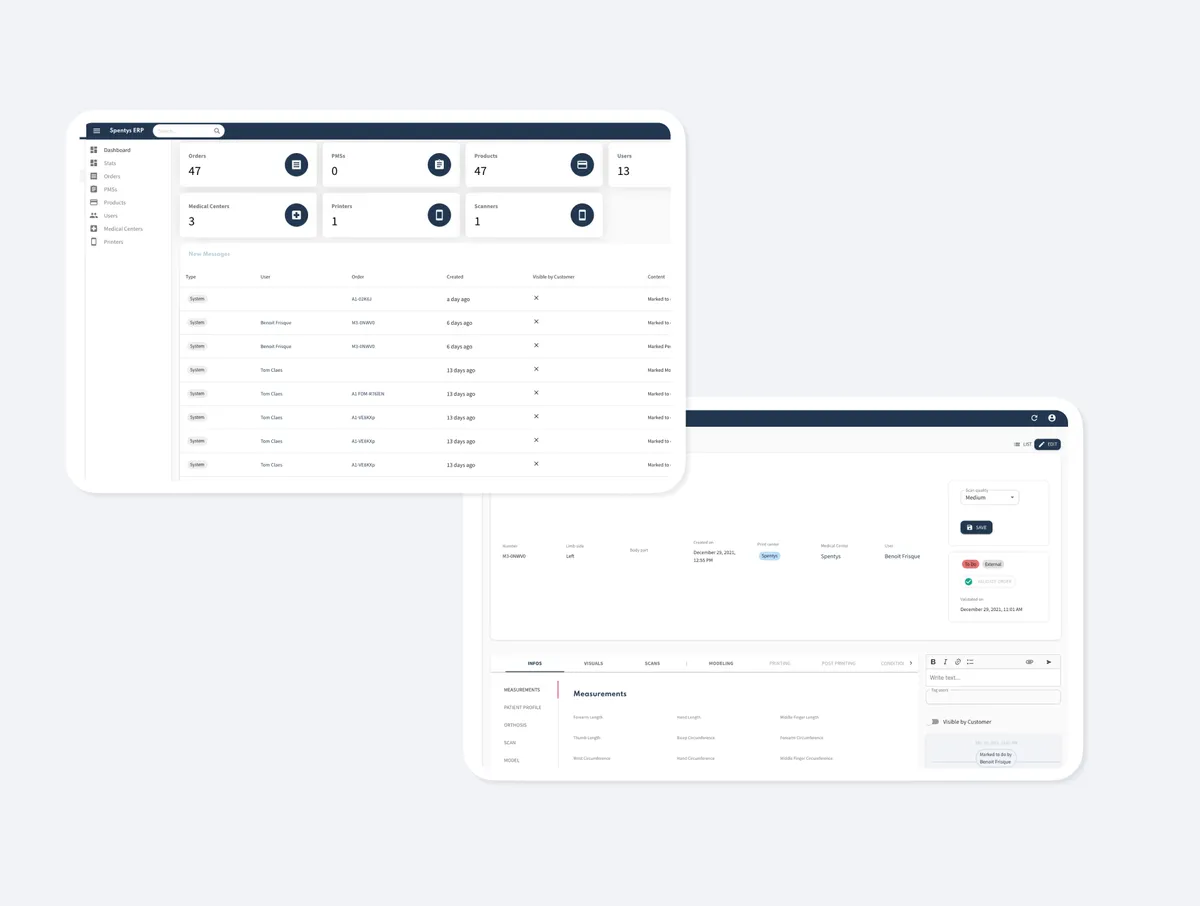
Once the application was stabilised and the departing developer had handed over, KERN-IT picked up the existing screen designs and produced a fully functional frontend prototype - a tangible base on which to build the new backend.
From prototype to production in 9 months
KERN-IT then built the backend in Python and Flask: data structures, 3D printing workflows, order status management, APIs connecting the practitioner portal to the internal back-office. Every step of the cycle - from patient scan to orthosis delivery - was modelled and encoded in the platform.
After 9 months, the mission concluded with a full knowledge transfer. Spentys was able to hire new developers and take development back in-house with a solid, documented and maintainable foundation. The iOS application, out of scope for this mission, was picked up in parallel by the internal team.
An end-to-end 3D printing workflow
The platform orchestrates every step of manufacturing: the practitioner creates the order and uploads the 3D scan, the modeller processes the file and submits the orthosis model for internal review, then practitioner sign-off. Once validated, the order moves to printing, G-code files are generated and dispatched to printers, and post-production tracking through to shipment is logged in the platform.
At every status change, the Spentys team is notified in real time via Microsoft Teams. Practitioners and internal staff collaborate in a messaging thread built directly into the order record.