Vibe coding is everywhere.
Describing an app to an AI, generating code automatically, launching a product in just a few days: it’s an appealing promise, especially for non-tech founders.
For many, this feels like a revolution. In reality, it is primarily an acceleration of a well-established trend.
Before vibe coding, there was no-code, followed by low-code. The goal remains the same: lowering the technical barrier to test an idea and launch faster.
And just like with no-code, the real challenge isn’t creating an MVP.
The real challenge is building a product that lasts.
Vibe coding isn’t a disruption; it’s a continuation
It is important to put things into perspective.
Vibe coding is not creating a new category of software.
Instead, it is accelerating a phase that already existed:
- Prototyping
- The MVP
- Market need validation
- Initial user feedback
Where a no-code MVP used to take several weeks, an AI-assisted prototype can now be produced in a matter of days.
This is genuine progress.
However, the structural ceiling remains the same.
Prototype vs. Product: A common and costly confusion
At KERN-IT, we have always worked by one simple rule:
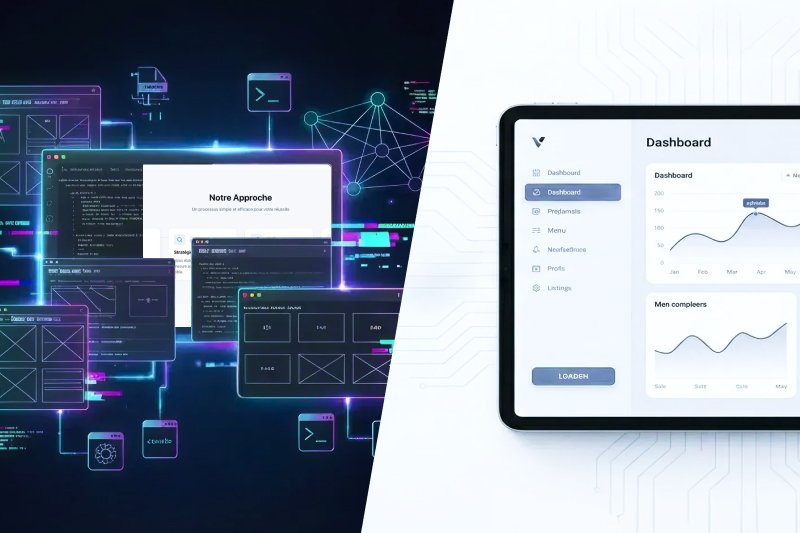
A prototype is not a product.
We systematically distinguish between two very different phases:
- The Sandbox
- Production
The Sandbox: Speed, Learning, Iteration
In this phase, vibe coding and AI are perfectly legitimate.
They allow you to:
- Express an idea quickly
- Test user journeys
- Explore features
- Validate a need without over-investing
At this stage:
- Code quality is not critical
- Robustness is not a priority
- The goal is to learn fast and at a lower cost
Production: A different craft, a different set of rules
The trouble begins when that prototype becomes:
- A sold product
- An application used daily
- A business-critical component
At that point, the rules change completely.
What was acceptable during the testing phase becomes a risk:
- Fragile architecture
- Loose security
- Poorly structured data
- Hard-to-maintain code
AI and Coding: The unspoken realities
Yes, an AI can write code.
No, it does not design software architecture.
Without human expertise, it often generates:
- File sprawl
- Redundant functions
- Hard-to-follow logic
- Invisible technical debt
This code works "in the moment."
But it quickly becomes:
- Difficult to evolve
- Risky to modify
- Impossible for a team to take over
At KERN-IT, we observe a clear distinction:
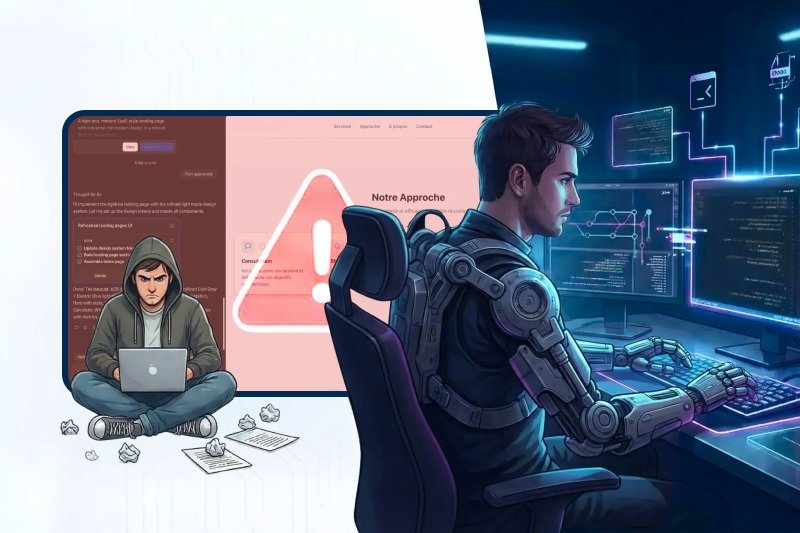
- Experienced developers use AI as an exoskeleton.
- Non-tech founders use it as an autopilot.
In the first case:
- AI saves time
- The code remains under control
- Quality increases
In the second case:
- Chaos builds up
- Problems are simply pushed down the road
AI does not eliminate complexity.
It shifts it in time.
Vibe coding, vibe engineering, agentic coding: the market is starting to draw lines
Since late 2025, the technical community has stopped lumping all practices together. Simon Willison, one of the industry's most widely read observers, proposed a distinction that is now being adopted everywhere:
- Vibe Coding: Using AI to generate code without precisely understanding what it produces; no tests, no reviews, no architecture. Fast, enticing, and irresponsible beyond the prototyping stage.
- Vibe Engineering (or Agentic Coding): Using the same AI tools within a rigorous professional framework, where the engineer remains fully accountable for the delivered code.
The difference isn’t technological; it’s methodological.
In a serious agentic coding workflow, the work ratio is inverted: roughly 80% of the time is spent on thinking, specification, and review, 20% on dialogue with the agent, and almost 0% on manual coding.
The engineer no longer types; they architect, guide, and validate. The agent executes, tests, and iterates until the criteria are met.
What this requires in practice:
- A robust automated test suite, without which the agent cannot iterate reliably.
- Structured documentation, allowing the agent to navigate the code without reading everything.
- Strict Git discipline, with atomic commits and a readable history.
- A Human-AI code review culture, where every contribution is challenged.
- A pre-defined architecture, which sets the boundaries of what the agent can and cannot do.
- Detailed specifications before a single key is pressed.
In other words: AI amplifies existing engineering; it does not replace it. Teams that truly apply these practices report measured, sustainable productivity gains of 2x to 3x. Those who "vibe-code" without a framework accumulate debt that eventually costs more than what they initially gained.
No-code and Vibe Coding: The same ceiling, reached faster
We’ve seen this movie before with the no-code movement.
At KERN-IT, we have been called upon to:
- Rescue no-code MVPs that had hit their saturation point.
- Secure applications exposed to the market too early.
- Redesign brittle databases.
- Build an architecture that is truly scalable and exit-ready.
Every serious project owner recognizes this:
- No-code is excellent for getting started.
- But it quickly hits its limits.
Vibe coding does not remove this ceiling.
It simplyallows you to reach it faster.
A central question that is often overlooked: differentiation
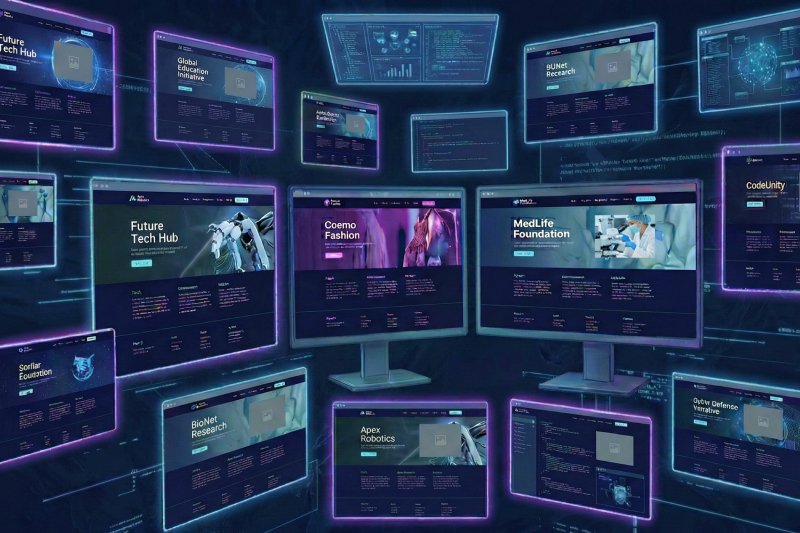
In the current trend, one point is often neglected.
If your product is:
- Generated by the same AIs
- Built with the same tools
- Based on the same patterns
Then a crucial question arises: What actually differentiates you?
If vibe coding is your only barrier to entry, you haven’t built a sustainable moat.
In the long run, the difference is made:
- Either through marketing
- Or through deep engineering
While everyone else stops at the MVP, some continue to build.
The critical moment: when things actually start working
Everything is fine… until the product finds its market.
Then come the real questions:
- How to handle scaling
- How to isolate tenants
- How to secure data
- How to evolve the database without breaking everything
This is usually when:
- Performance drops
- Costs skyrocket
- Alerts pile up
- Every modification becomes risky
At this point, what’s missing isn’t a new AI tool.
What’s missing are:
- Best practices
- An architecture designed for growth
- A long-term vision
AI is not a magic solution; it is an amplifier
A truth that is seldom put into words:
AI amplifies everything.
It amplifies:
- Your clarity or your confusion
- Your rigor or your disorder
- Your vision or your improvisation
When everyone uses the same tools, the difference is always found in:
- Architectural choices
- The added delta
- Invisible engineering
This is precisely why the distinction between vibe coding and vibe engineering matters: the tool is the same, but the discipline surrounding it is not.
When should you call on KERN-IT?
At KERN-IT, we intervene at several key moments in a digital product's lifecycle, including at the very beginning.
From the initial idea or business need
KERN-IT also supports projects in their very early stages.
We can help you:
- Clarify an idea or business need
- Challenge a product vision
- Build a functional prototype
- Intelligently leverage no-code, low-code, and AI
- Rapidly test a market without over-investing
👉 Prototyping is an integral part of our services.
But it is designed from day one as a stage, not as an end goal.
During launch and early user acquisition
When:
- The prototype is live
- The first users are onboarding
- The first feedback is rolling in
- The product starts to breathe
We help you:
- Fix critical bottlenecks
- Prioritize the right growth areas
- Prepare the next steps without breaking what works
When growth exposes technical limits
This is very often when things get complicated:
- Performance can no longer keep up
- Automations become brittle
- Data is difficult to migrate or evolve
- Security becomes a critical concern
- Every modification becomes risky
At this stage, stacking more no-code or vibe coding is no longer the solution.
Our role at KERN-IT
Our role isn't to systematically start from scratch.
Our role is to choose the right technical trajectory.
In concrete terms, we step in to:
- Transform a fragile MVP into a robust product
- Take over or rebuild a solid technical core
- Structure data and workflows
- Prepare for scaling in a controlled manner
We know:
- When no-code and vibe coding are relevant
- When they become a hindrance
- How to transition from one to the other without losing value
FAQ: Vibe Coding, Vibe Engineering, Agentic Coding
What is vibe coding?
Vibe coding consists of using AI to generate code from natural language descriptions without writing the code yourself, and often without thoroughly reviewing or testing the output.
What is the difference between vibe coding and vibe engineering?
Vibe coding is a fast, unconstrained practice suited for prototyping. Vibe engineering (also known as agentic coding) leverages the same AI tools but within a rigorous engineering framework: testing, architecture, code reviews, documentation, and observability. The engineer remains fully accountable for the delivered code.
What is agentic coding?
Agentic coding is a structured workflow where an AI agent breaks down a task, generates code, runs tests, interprets errors, and iterates until the goal is met. The human spends roughly 80% of their time on thinking, specification, and review, and almost no time on manual coding.
Is vibe coding suitable for a production product?
No, not on its own. It is well-suited for prototyping and MVPs, but for a sustainable product, it requires architectural refactoring and rigorous agentic coding practices.
When should you move away from no-code or vibe coding?
When performance, security, data structures, or product evolution become bottlenecks to your growth.
Can a no-code or AI MVP be transformed into a real product?
Absolutely, as long as you follow a disciplined approach: avoid stacking more technical debt and implement rigorous engineering standards as you refactor.
Will AI replace developers?
No. It amplifies existing engineering. Teams that use it well gain speed and quality. Those who use it as an autopilot accumulate debt that eventually costs more than the time they saved.
Conclusion
Today, anyone can launch a no-code MVP. Anyone can vibe code a prototype. Anyone can test an idea quickly.
Butvery few know what to do next.
At KERN-IT, we design digital cores, solid architectures, and scaling engines capable of supporting your growth. We don't choose between speed and rigor: we combine both through agentic coding and disciplined engineering.
👉 KERN-IT transforms your prototypes into real products, helping you stand out.
If your MVP is working but the path forward is becoming unclear, it’s likely the perfect time to build a structured future.
Has your prototype become unmanageable?
You’ve vibe-coded a product that found its first users, and now you’re not sure how to take it to the next level? This is exactly the kind of situation where KERN-IT can help.
Let’s talk about your project: we’ll tell you what’s worth keeping, what needs refactoring, and how to transition to a rock-solid foundation without losing what you’ve already built.