Inclusive writing for the web
By Greg Mattheus - Published : 24 Jan, 2025
4 min read

It is worth noting that the use of inclusive language is a subject that sparks discussion.
While some consider it a positive and necessary evolution of the language, others perceive it as an overcomplication or a threat to the French language. Nevertheless, inclusive writing, designed to promote gender equality, is gradually becoming more prevalent.
However, in the digital and web development fields, its adoption raises specific considerations. Before exploring its impact on the web, it is essential to define it, understand its origins, and examine the various expert opinions on the subject.
Definition :
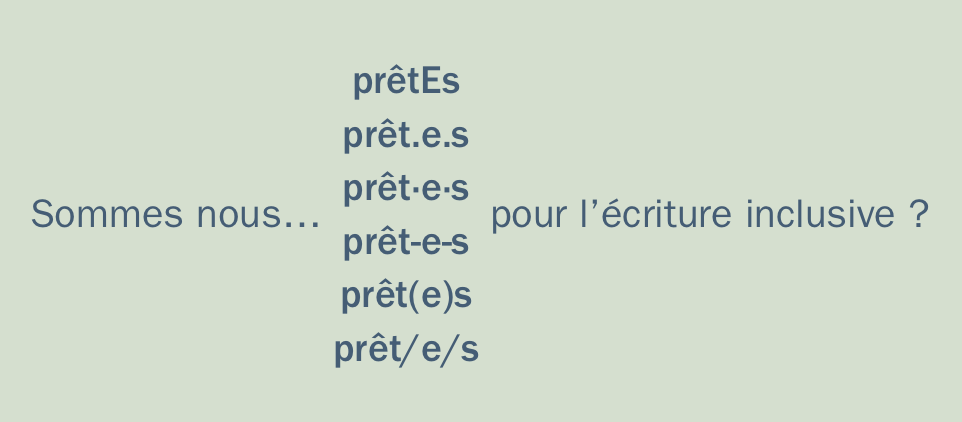
Inclusive writing encompasses a set of linguistic practices designed to eliminate gender bias in written communication. In the French language, it can be seen by making all gender identities visible, notably by feminizing job titles, using gender-neutral phrasing, and employing typographic marks, such as the middle dot (for example, “étudiant·e·s”).
The Académie française
The Académie française has repeatedly spoken out against inclusive writing, which it considers a threat to the clarity and unity of the French language (in 2017, 2021, and most recently in 2023).
As a result, they remain opposed to inclusive language, pointing to concerns over its impact on readability, linguistic coherence, and the ease of learning French.
What linguists say
The debate over inclusive writing remains heated within the linguistic community, reflecting concerns about both social representation and the structure and readability of the French language.
Advocates of inclusive writing emphasize gender representation and the natural evolution of language. They argue that the generic masculine reinforces bias and marginalizes women, whereas language is constantly evolving and must adapt to societal changes.
Opponents argue that inclusive writing center on complexity, readability, and a lack of linguistic standard. They contend that markers like the middle dot can make reading more difficult, and this writing lacks a solid linguistic foundation.
Accessibility considerations
Inclusive writing is a subject of debate, particularly regarding its impact on people with dyslexia, as it can make reading more difficult for them. While the Association for the Inclusion of People with Disabilities (APHPP) believes that inclusive writing makes texts inaccessible to those with 'DYS' disorders, other studies suggest that these difficulties are primarily due to a lack of familiarity with this style of writing.
To sum up :
Advantages
- Promoting Equality and Diversity: By adopting neutral language, inclusive writing contributes to fair gender representation, reflecting the values of equality and diversity.
- Wider Audience engagement: Inclusive communication allows you to engage with a more diverse public, ensuring that those overlooked by traditional language feel included and addressed.
- Enhanced Brand Identity: Embracing inclusive communication reflects a modern, socially engaged brand, helping to build trust and a positive reputation with diverse audiences.
Challenges
- Complexity and Readability: The use of typographic marks, such as the middle dot, can make reading more difficult, particularly for individuals with visual or cognitive impairments.
- Absence of a Unified Standard: Inclusive language remains a polarizing topic. While some readers view it as a vital evolution, others see it as an unnecessary complication.
- Impact on Search Engine Optimization (SEO): Since search engines are optimized for traditional word forms, using inclusive writing could potentially affect the organic search ranking of content.
Impact on SEO
Inclusive language can have a direct impact on Google SEO. Search engines often find it difficult to properly index terms using middle dots or parentheses; this fragmentation of keywords can ultimately decrease content visibility and search rankings.
Best Practices:
To improve SEO for content using inclusive writing in French, it is recommended to use simple, inclusive phrases (such as 'étudiants et étudiantes'), incorporate non-inclusive terms in meta tags, and use gender-neutral wording.
Conclusion
Inclusive writing disrupts traditional norms, raising the question: is it progress or just a new requirement? In our evolving society, rather than taking a fixed position, it is essential to remain mindful of the context and the people we are addressing.
SEO is built around keywords that match search intent. While providing relevant content is essential for visibility, it is worth noting that inclusive language remains rare in actual user search behavior.
Carefully planned strategies can bridge the gap between inclusive language and SEO; however, they involve an extra layer of complexity and resources that need to be factored in.