Successful Digital Projects: Why Software Development Starts Long Before the Code
By Khalid Yagoubi - Publication : 27 Feb, 2026
5 min read

How KERN IT helps organizations turn a vague idea into a robust digital product
Most digital projects don't become complex because of technology.
They become complex because the structural decisions are never truly made.
At KERN IT, this is exactly when we step in.
Not when everything is clear.
But when it no longer is.
Who this approach is for (and who it isn't)
Let’s be explicit.
This approach is designed for:
- Leaders who want to understand before they invest
- Teams that are ready to be challenged
- Organizations that prefer making decisions over relying on hope
It is not for:
- Those looking for a simple executor
- Those who want to "go fast" without accepting the need to slow down at the right time
- Those who confuse feature accumulation with product value
This positioning is intentional.
It avoids shaky projects on both sides.
The root cause that most projects fail to define clearly
With experience, one observation consistently returns:
Digital projects rarely fail for lack of technology. They fail due to a surplus of unmade decisions.
This results in:
- Vague directions
- Piled-up compromises
- Over-engineered softwares
- Layers added without ever re-evaluating the foundation
Coding in this context only accelerates a wrong trajectory.
The KERN IT approach: slowing down to take back control
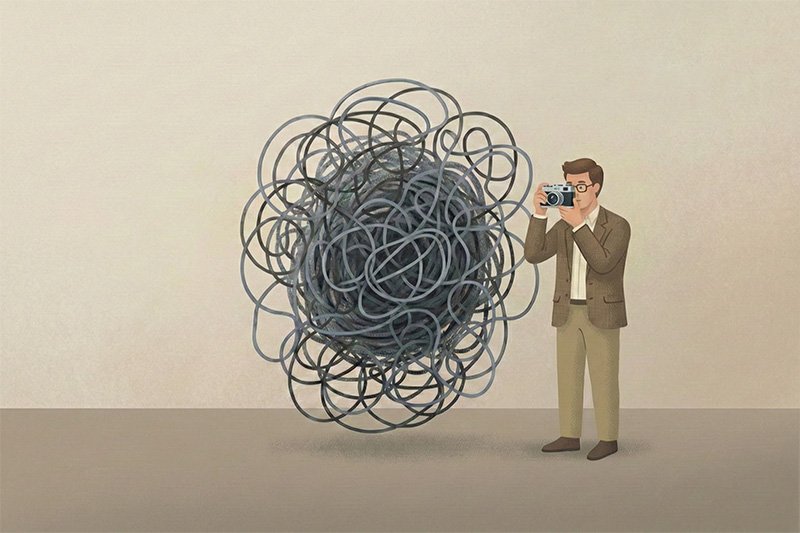
KERN IT isn't an agency that simply piles up solutions.
Our role is to enforce clarity before we begin construction.
Sometimes, this means:
- Drastically reducing a project's scope
- Confronting conflicting visions
- Accepting that a project is not yet ready
- Saying no to certain requests
It isn’t comfortable.
But that is precisely where value is created.
A methodology designed for reality, not for slides
We know that projects exist in imperfect contexts:
- Time pressure
- Political constraints
- Decisions already partially committed
Our methodology is not a rigid tunnel.
It is a decision-making framework designed to restore structure where it has been lost.
Step 1 – Discovery Workshop
Bringing unaddressed decisions to light
The Discovery workshop is not an "ideas" workshop.
It is a workshop for clarification and decision-making.
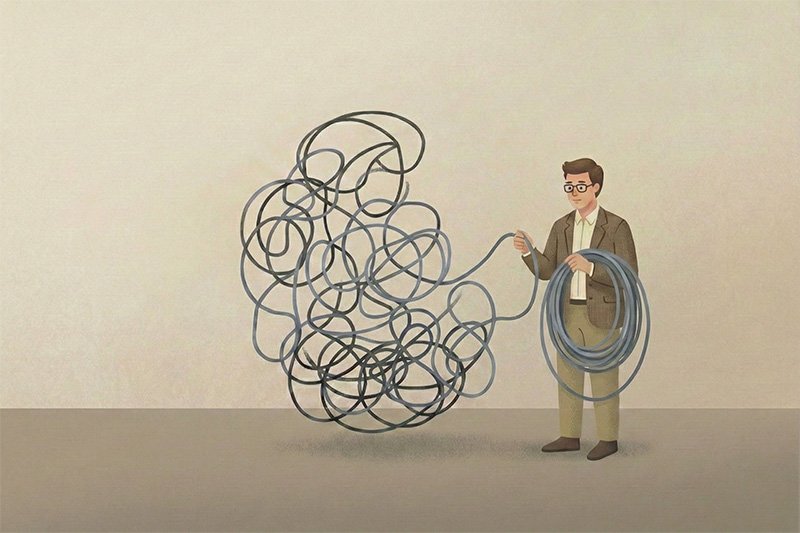
It serves to:
- Align stakeholders
- Bring real disagreements to the surface
- Identify risky assumptions
- Distinguish real needs from legacy habits
Very often, it is the first time everyone is talking about the same project.
Step 2 – Business structuration
Thinking about value before the solution
Using tools like the Business Model Canvas, we work on:
- Actual value creation
- Critical dependencies
- Structural inconsistencies
- Areas of uncertainty
This avoids a classic bias:
Optimizing a solution before validating the problem.
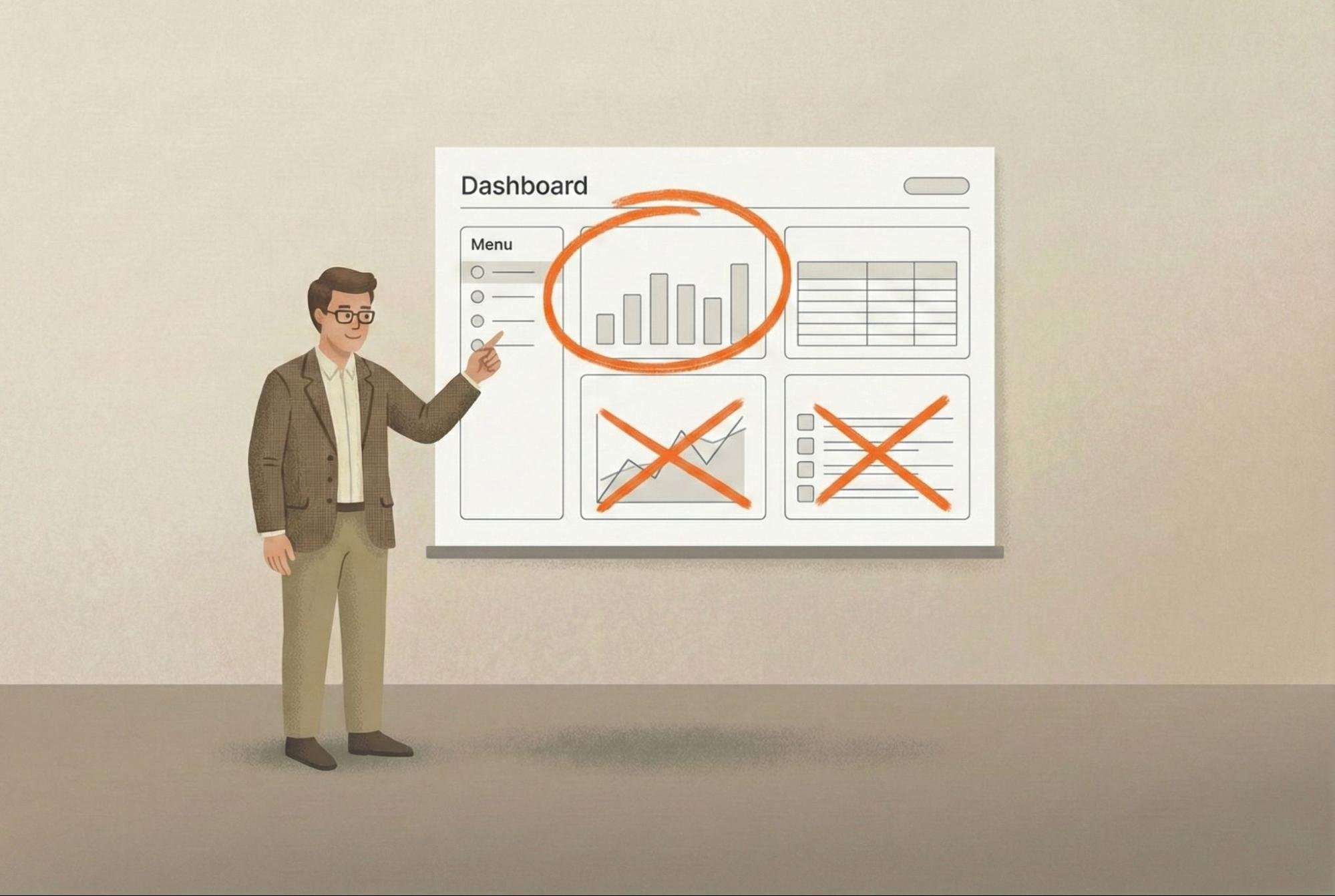
Prototyping to decide, not to reassure
Low-fidelity prototyping
Wireframes, user flows, simple diagrams.
Objectives:
- Test the logic
- Kill bad ideas early
- Decide fast
High-fidelity prototyping
Clear interactive mockups.
Objectives:
- Align without ambiguity
- Serve as a shared source of truth
- Drastically reduce misunderstandings
The prototype is a decision-making tool, not a decorative deliverable
Testing the market and traction without coding
A reflex that is still too common is to develop just to "see if it works."
At KERN IT, we do the opposite: we verify before we invest.
Why coding too early is a trap
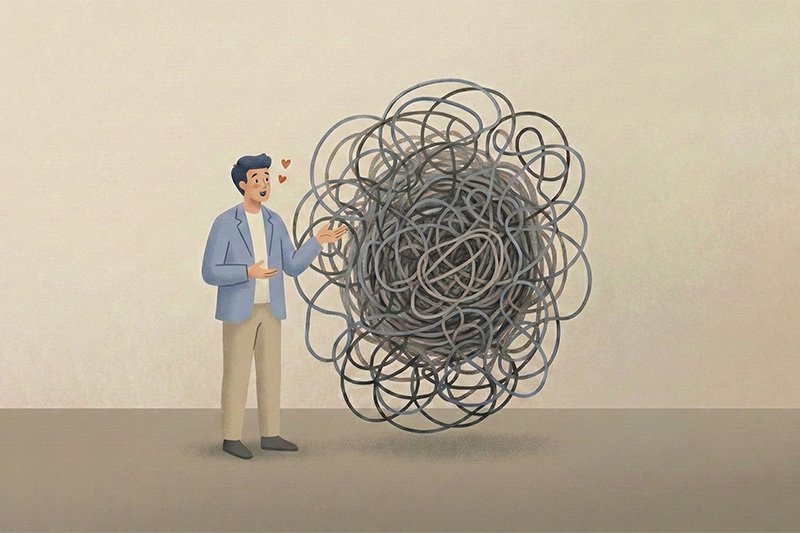
Development creates several biases:
- Emotional attachment
- Difficulty questioning the core idea
- A tendency to add complexity
The result: we end up optimizing a product the market doesn't want.
Our operational levers
- Validation landing pages to test a message
- Smoke tests to measure real intent
- User interviews to understand existing habits
- Human prototypes to test a service before automating it
These mechanisms are intentionally:
- Fast
- Low-cost
- Disposable
Their value lies in the decisions they enable.
IA, no-code, low-code and Vibe Coding
Knowing how to use them... but, mostly, how to step away from them
At KERN IT, we don’t reject AI, no-code, low-code, or Vibe Coding.
We know how to use them.
But above all, we know when to stop.
The glass ceiling of "fast" projects.
These approaches are excellent for:
- Exploring an idea
- Testing a use case
- Creating momentum
But they quickly hit a ceiling:
- Fragile architecture
- Limited scalability
- Invisible technical debt
- Tool dependency
Theseprojects are disposable by nature.
The problem starts when you try to make them last.
Where KERN IT stands apart
We don’t try to "save" a prototype.
We know how to:
- Extract what truly creates value
- Redefine a healthy target architecture
- Rebuild a robust technical product
👉 You don’t migrate a disposable prototype.
👉 You outgrow it.
This is where experience makes all the difference.
And if the project ends there?
It is a possible outcome.
And sometimes, it's for the best.
Even then, the client walks away with:
- Clear decisions
- Validated (or invalidated) hypotheses
- Deep market insights
- Actionable deliverables
It is not a failure.
It is a major cost-saving.
Let’s talk budget, plain and simple
Discovery Workshop
€1,500 to €3,000 excl. VAT
Compare this to:
- A few days of useless development
- One poor structural decision
No-code Validation
€2,000 to €6,000 excl. VAT
Compare this to:
- A poorly scoped MVP costing tens of thousands
- A failed six-figure redesign
Prototyping (Low to High Fidelity)
€3,000 to €10,000 excl. VAT
Often pays for itself through:
- Scope reduction
- Reduced rework
- Gained clarity
The KERN IT Rule
The greater the uncertainty, the more you should invest in the decision, not the code.
Development should never be used to make decisions for you.
Conclusion

At KERN IT, we don't build "the next Instagram, but with one extra feature."
We help organizations:
- Bring order to the chaos
- Force strategic trade-offs
- Reduce risk
- Build only what deserves to be built
If your project is moving without clear tracks,
the real danger isn't going too slowly.
The real danger is going fast… in the wrong direction.
What now?
If you want to:
- Clear up a blurry situation
- Test a market without getting locked in
- Transform a disposable prototype into a robust product
A Discovery workshop is often the most rational starting point.
Before we code, let’s decide.